Contract Law & Commercial Agreements
Contract Law is the cornerstone of every commercial transaction. Master Indian Contract Act 1872 doctrines, capacity, free consent (coercion, undue influence), void vs voidable agreements, liquidated damages vs penalty, frustration of contract (Force Majeure), and specific performance remedies.

🇮🇳 Indian Market Benchmark
Core Track Highlights
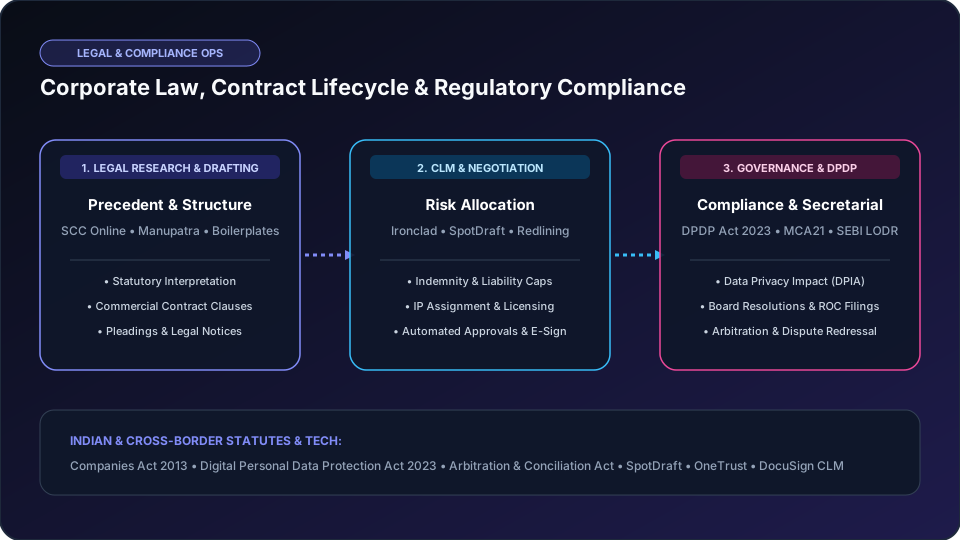
Commercial Contract Enforceability & Lifecycle Framework
Offer, acceptance, lawful consideration, execution, performance, breach, and judicial remedies.
Essential Validity Elements
Offer, unequivocal acceptance, free consent, lawful object, and consideration.
Risk Allocation Clauses
Indemnification, representations & warranties, and limitation of liability caps.
Breach & Damages (Sec 73/74)
Ascertaining direct damages, consequential damages, and pre-estimated liquidated damages.
Dispute Resolution & Jurisdiction
Arbitration clauses, governing law, and exclusive territorial court jurisdiction.
Structured Phase-by-Phase Syllabus
Focus on build-by-doing milestones rather than passive video consumption.
Phase 1: Indian Contract Act 1872 Foundations
- Formation of contracts: Offer, acceptance, communication rules, and intention to create legal relations
- Lawful consideration (Section 2d) and exceptions to "no consideration, no contract"
- Free consent: Coercion (Sec 15), Undue Influence (Sec 16), Fraud (Sec 17), and Misrepresentation (Sec 18)
Phase 2: Discharge, Breach & Statutory Remedies
- Discharge by performance, novation, alteration, and doctrine of frustration (Section 56 / Force Majeure)
- Breach of contract: Anticipatory breach vs actual breach
- Section 73 (Unliquidated damages - Hadley v Baxendale rule) vs Section 74 (Liquidated damages and penalties)
Technical Interview Questions & Answers
Q1: What is the key difference between Liquidated Damages and Penalty under Section 74 of the Indian Contract Act?
Under Indian law (Section 74), courts do not enforce penal clauses designed purely to terrify a party into performance. Liquidated damages must represent a genuine pre-estimate of loss. The court awards reasonable compensation not exceeding the specified amount, requiring the claimant to prove actual injury unless the loss is impossible to quantify.
Frequently Asked Questions
Is an e-contract signed digitally legally enforceable in India?
Yes! Under the Information Technology Act 2000 (Section 10A), electronic contracts formed via electronic records and validated via digital signatures or Aadhaar e-Sign are fully legally valid and enforceable in Indian courts.
Target Job Roles
Commercial Contracts Associate
Demand: Very HighSenior Legal Contracts Counsel
Demand: HighRelated Career Tracks
Need a Personalized Career Plan?
Take our 20+ Signal Career Compass to assess aptitude and discover suitable roadmaps.
Start Career Compass