Cybersecurity & Ethical Hacking
With high-profile cyberattacks and digital data protection acts (such as India’s DPDP Act), cybersecurity is a top corporate priority. This track bridges defensive Blue Team operations (SOC Analyst alert triage, SIEM Splunk queries, PCAP packet analysis) and offensive Red Team penetration testing (Burp Suite web exploitation, privilege escalation, Kali Linux tooling, and AWS/Azure cloud security posture management).

🇮🇳 Indian Market Benchmark
Why This Skill Pays Off in 2026
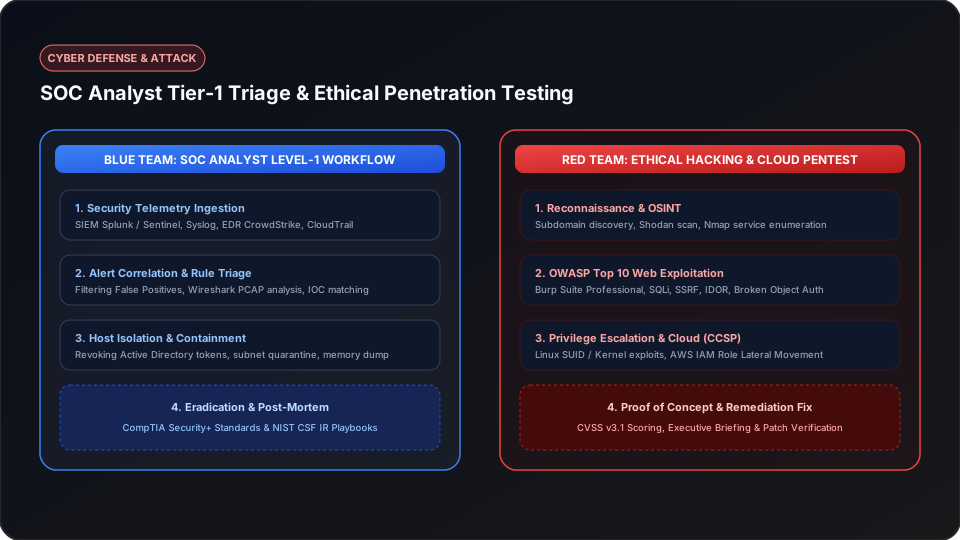
SOC Analyst Tier-1 Defense Matrix & Penetration Testing Lifecycle
Side-by-side comparison of Blue Team security telemetry ingestion and alert triage versus Red Team reconnaissance, vulnerability exploitation, and remediation verification.
SIEM Alert Triage
Ingesting logs across CrowdStrike EDR, firewall syslog, and AWS CloudTrail into Splunk for correlation and threat hunting.
Packet & Malware Analysis
Deconstructing network captures in Wireshark and analyzing suspicious payloads inside isolated sandbox environments.
OWASP Top 10 Exploitation
Burp Suite Professional testing for SQLi, SSRF, Broken Object Level Auth (BOLA), and JWT tampering.
Cloud Security (CCSP)
Auditing IAM over-privileging, S3 bucket misconfigurations, and cloud security posture management (CSPM).
Structured Week-by-Week Learning Syllabus
Focus on build-by-doing milestones rather than passive video lectures.
Phase 1: Network Defense & SOC Tier-1 Triage
- TCP/IP 3-way handshake, DNS, ARP poisoning, and Wireshark PCAP analysis
- Splunk SIEM query language (SPL), alert correlation, and false positive reduction
- MITRE ATT&CK framework mapping and NIST incident response lifecycle
Phase 2: Web Application & Network Penetration Testing
- Reconnaissance with Nmap, Shodan, and Sublist3r
- OWASP Top 10 vulnerabilities: SQL injection, XSS, SSRF, IDOR
- Burp Suite repeater, intruder, and writing structured vulnerability reports (CVSS v3.1)
Phase 3: Cloud Security Posture (CCSP) & Active Directory
- Active Directory attack paths: Kerberoasting, Pass-the-Hash, BloodHound mapping
- AWS/Azure cloud security posture management (CSPM) and IAM privilege escalation
- CompTIA Security+ exam readiness and hands-on lab drilling
Top Interview Questions & Answers
Q1: What are the steps of the Incident Response lifecycle according to NIST SP 800-61?
The NIST incident response lifecycle consists of four main phases: 1) Preparation (tools, training, policies), 2) Detection & Analysis (alert triage, verifying IOCs, scoping the breach), 3) Containment, Eradication & Recovery (isolating compromised endpoints, purging malware, restoring from backups), and 4) Post-Incident Activity (lessons learned, post-mortem report, refining defense rules).
Q2: What is an SSRF (Server-Side Request Forgery) attack and why is it devastating in cloud environments?
SSRF occurs when an attacker tricks a backend server into making requests to unauthorized internal destinations. In cloud environments (AWS/GCP), attackers frequently exploit SSRF to query the instance metadata service (e.g. 169.254.169.254) to steal temporary IAM credentials and gain lateral access to cloud resources.
Frequently Asked Questions
Can I start in cybersecurity as a fresher without prior IT experience?
Yes! Tier-1 SOC Analyst roles actively hire freshers who demonstrate strong networking basics, Wireshark packet analysis, and hands-on TryHackMe / HackTheBox badges.
Is ethical hacking legal to practice in India?
Practicing on authorized platforms (HackTheBox, PortSwigger Web Security Academy) or systems you have explicit written permission to test is 100% legal and recommended.
Target Job Roles
SOC Analyst (Tier-1 / Tier-2)
Demand: Very HighVulnerability Assessment & Pentester
Demand: HighCloud Security Engineer (CCSP)
Demand: HighRelated Career Tracks
Not sure if Cybersecurity & Ethical Hacking is right for you?
Take our 30-second career quiz to find your highest-ROI match.
Start Free Quiz