Solar & Renewable Energy Design (PVsyst & ESG)
As global nations commit to Net Zero emissions and India targets 500GW of non-fossil capacity by 2030, solar and renewable energy design has become a high-growth career track. Master PVsyst 3D near-shading simulations, P50/P90 energy yield DPR forecasting, central vs string inverter sizing, high-voltage substation grid interconnection, and corporate ESG compliance auditing under SEBI BRSR and GHG Protocol standards.

🇮🇳 Indian Market Benchmark
Why This Skill Pays Off in 2026
Utility Solar Farm PVsyst Simulation & High-Voltage Grid Interconnection
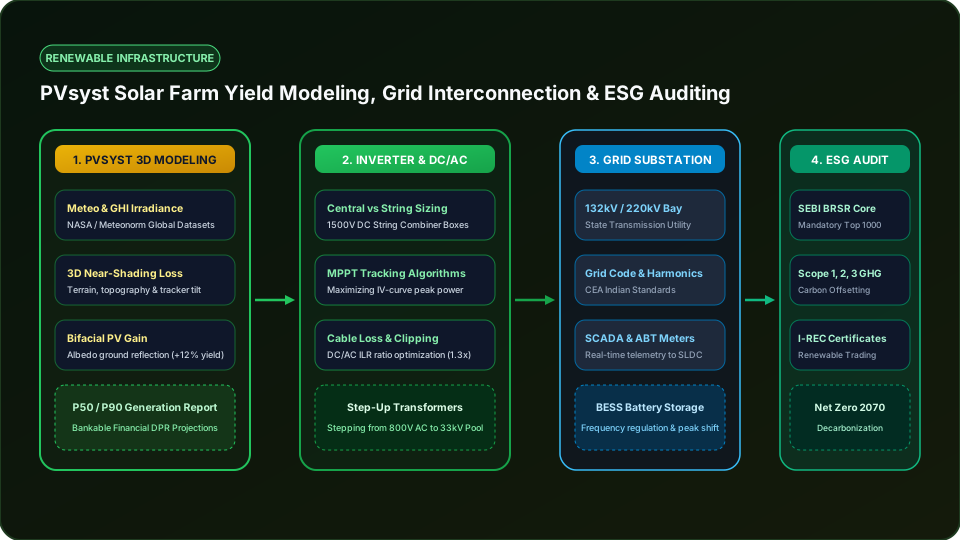
Four-stage renewable lifecycle: PVsyst 3D yield modeling, central inverter DC/AC conversion, substation grid synchronization, and SEBI BRSR ESG compliance reporting.
PVsyst 3D Shading Simulation
Simulating complex terrain near-shading losses and bifacial albedo gain to compute P50/P90 bankable energy yields.
Balance of Plant (BOP)
Sizing 1500V DC solar array strings, combiner boxes, central inverters, and medium-voltage step-up transformers.
Substation Grid Sync
Synchronizing with state transmission utilities at 33kV/132kV while complying with CEA grid code harmonic standards.
Corporate ESG Auditing
Calculating Scope 1, 2, and 3 greenhouse gas emissions and auditing corporate compliance under SEBI BRSR guidelines.
Structured Week-by-Week Learning Syllabus
Focus on build-by-doing milestones rather than passive video lectures.
Phase 1: Solar Irradiance & PVsyst 3D Yield Modeling
- Global Horizontal Irradiance (GHI) and DNI meteorological data sourcing
- PVsyst 3D scene construction, near-shading calculations, and bifacial module albedo gain
- P50, P90, and P99 generation probability curves for bankable Detailed Project Reports (DPR)
Phase 2: Electrical Balance of Plant & Substation Grid Integration
- 1500V DC array stringing, DC/AC inverter loading ratio (ILR), and combiner box sizing
- Step-up transformers (800V to 33kV to 132kV) and single-line diagrams (SLD) in AutoCAD
- Grid code compliance, CEA harmonic limits, and SCADA monitoring protocols
Phase 3: ESG Compliance Auditing & Carbon Decarbonization
- SEBI Business Responsibility and Sustainability Reporting (BRSR Core) guidelines
- Scope 1 (Direct), Scope 2 (Electricity), and Scope 3 (Value Chain) GHG carbon accounting
- International Renewable Energy Certificates (I-RECs) and corporate net-zero roadmaps
Top Interview Questions & Answers
Q1: What is the difference between P50 and P90 energy generation estimates in PVsyst?
P50 represents the energy yield where there is a 50% probability that actual production will exceed that value in any given year (the expected median). P90 is a conservative financial benchmark where there is a 90% probability that production will exceed this threshold. Commercial lenders and banks insist on P90 estimates to calculate debt service coverage ratios (DSCR).
Q2: What are Scope 1, Scope 2, and Scope 3 greenhouse gas emissions under the GHG Protocol?
Scope 1 covers direct emissions from company-owned sources (e.g. diesel generators, company vehicles). Scope 2 covers indirect emissions from the generation of purchased electricity, steam, heating, and cooling consumed by the reporting company. Scope 3 covers all other indirect emissions across the entire upstream and downstream value chain (supply chain suppliers, employee commutes, product end-of-life disposal).
Frequently Asked Questions
Do I need an electrical engineering degree to work in solar design?
An electrical or mechanical engineering degree is traditional, but civil engineers, environmental science graduates, and architects routinely design solar farms after mastering PVsyst and AutoCAD.
What is driving the massive boom in ESG compliance auditing in India?
The Securities and Exchange Board of India (SEBI) made Business Responsibility and Sustainability Reporting (BRSR) mandatory for the top 1,000 listed companies, requiring verified assurance of ESG metrics.
Target Job Roles
Solar Design & PVsyst Engineer
Demand: Very HighRenewable Energy Project Manager
Demand: HighESG Sustainability Analyst
Demand: Very HighRelated Career Tracks
Not sure if Solar & Renewable Energy Design (PVsyst & ESG) is right for you?
Take our 30-second career quiz to find your highest-ROI match.
Start Free Quiz