Platform Engineering & Internal Developer Platforms (IDPs)
Platform Engineering is the natural evolution of DevOps—treating the developer experience as a product. Learn how to architect self-service Internal Developer Platforms (IDPs) using Spotify Backstage, Port, and Kratix. Standardize multi-cloud provisioning using Crossplane and Terraform, enforce policy-as-code guardrails with Kyverno and OPA, and empower product engineering teams to deploy microservices in minutes without submitting DevOps tickets.

🇮🇳 Indian Market Benchmark
Why This Skill Pays Off in 2026
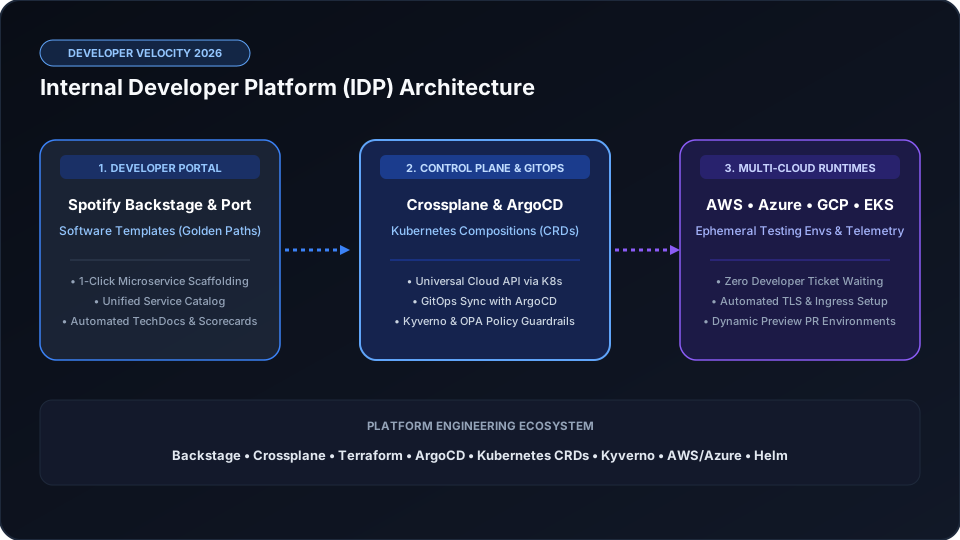
Internal Developer Platform (IDP) Control Plane Architecture
Full-stack platform workflow showing Spotify Backstage software catalog, Crossplane Kubernetes CRDs, ArgoCD GitOps sync, and ephemeral environment provisioning.
Self-Service Developer Portal
Spotify Backstage providing golden path software templates, unified API docs, and developer scorecards.
Declarative Universal Control Plane
Crossplane turning Kubernetes into a universal control plane to spin up AWS RDS, Azure VNets, and GCP buckets declaratively.
GitOps Synchronization
ArgoCD maintaining continuous reconciliation between declarative Git repositories and running clusters.
Automated Ephemeral Environments
Spinning up dynamic preview PR environments with automatic teardown to slash cloud waste.
Structured Week-by-Week Learning Syllabus
Focus on build-by-doing milestones rather than passive video lectures.
Phase 1: Advanced Kubernetes Orchestration & Custom Resource Definitions (CRDs)
- Mastering Kubernetes architecture, Operator pattern, and Kubebuilder controllers in Go
- Helm chart templating, Kustomize overlays, and GitOps workflows with ArgoCD
- Multi-tenant cluster networking, Cilium CNI, and Service Mesh (Istio / Linkerd)
Phase 2: Declarative Cloud Control Planes with Crossplane & Terraform
- Crossplane Compositions: Defining custom infrastructure APIs as Kubernetes CRDs
- Terraform modularization, state locking, and Infracost CI/CD gatekeeping
- Automated policy-as-code enforcement using Kyverno and Open Policy Agent (OPA)
Phase 3: Building the Internal Developer Portal (Backstage) & Ephemeral Envs
- Scaffolding Spotify Backstage plugins, Software Catalogs, and TechDocs
- Creating 1-click Golden Path templates for microservice bootstrapping
- Automating dynamic Ephemeral Preview Environments per GitHub Pull Request
Top Interview Questions & Answers
Q1: How does Platform Engineering differ from traditional DevOps?
Traditional DevOps often resulted in developers taking on excessive operational cognitive load or DevOps teams becoming bottleneck ticket-handlers. Platform Engineering solves this by building an Internal Developer Platform (IDP) that treats developers as customers—providing self-service "Golden Paths" that automate infrastructure provisioning, security compliance, and deployments.
Q2: What is Crossplane and why is it preferred over raw Terraform for IDPs?
Crossplane extends Kubernetes into a universal cloud control plane. While Terraform runs as an execution job that creates infrastructure and stops, Crossplane runs continuous reconciliation loops inside Kubernetes. It enables platform teams to publish high-level Custom Resource Definitions (CRDs) that developers can consume natively using standard kubectl/k8s manifests.
Frequently Asked Questions
What background do I need before learning Platform Engineering?
A solid foundation in Linux, Docker containers, Kubernetes fundamentals, and basic CI/CD (GitHub Actions / GitLab) is the ideal prerequisite.
Which companies are hiring Platform Engineers in India?
All major tech companies and GCCs including Swiggy, Zomato, CRED, Walmart Global Tech, target, JPMorgan Chase, and Microsoft India.
Target Job Roles
Platform Engineer
Demand: Very HighLead Platform Architect
Demand: HighDeveloper Experience (DevEx) Engineer
Demand: HighRelated Career Tracks
Not sure if Platform Engineering & Internal Developer Platforms (IDPs) is right for you?
Take our 30-second career quiz to find your highest-ROI match.
Start Free Quiz