Digital Marketing & SEO Performance
Digital marketing has evolved into an algorithmic, data-driven science. Master Programmatic SEO to dynamically generate thousands of high-converting, indexable landing pages targeting long-tail intent. Learn Performance Marketing arbitrage on Meta Ads Manager and Google Ads to scale ROAS (Return on Ad Spend), implement server-side Conversion APIs (CAPI), and conduct technical SEO audits that maximize Google crawl budgets and Core Web Vitals.

🇮🇳 Indian Market Benchmark
Why This Skill Pays Off in 2026
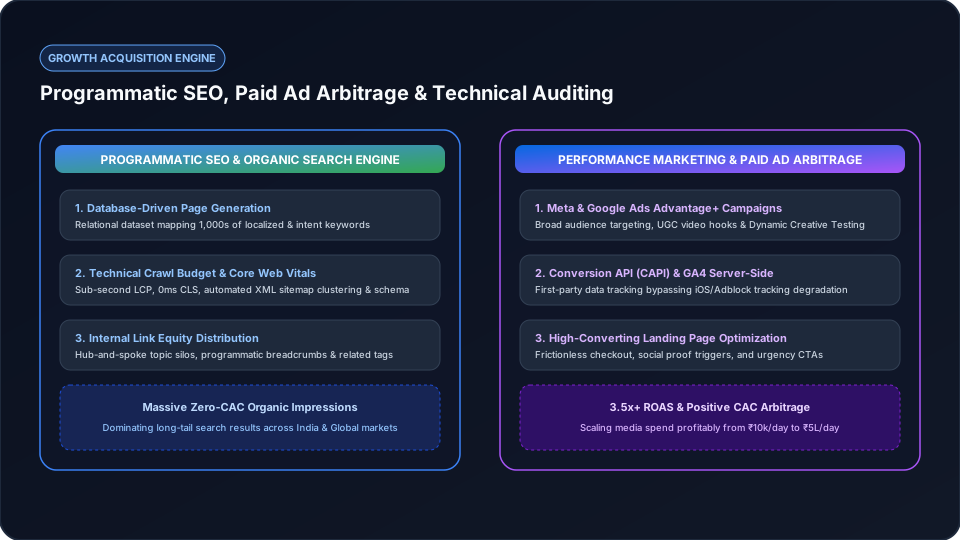
Programmatic SEO & Performance Paid Media Arbitrage Funnel
Two-engine growth architecture: Organic programmatic SEO capturing long-tail zero-CAC search intent, paired with Meta & Google Ads conversion arbitrage funnels.
Database-Driven SEO
Generating thousands of unique, helpful landing pages targeting localized queries from structured relational datasets.
Technical SEO Auditing
Optimizing crawl efficiency, XML sitemap hierarchies, schema markup, and sub-second Core Web Vitals (LCP/CLS).
Paid Arbitrage Engine
Scaling Meta Advantage+ and Google Performance Max campaigns with dynamic creative testing and ROAS > 3.0x.
Server-Side Tracking
Implementing Meta Conversions API (CAPI) and GA4 server containers to bypass adblockers and cookie degradation.
Structured Week-by-Week Learning Syllabus
Focus on build-by-doing milestones rather than passive video lectures.
Phase 1: Technical SEO Audits & Core Web Vitals
- Crawling sites with Screaming Frog: Status codes, redirect chains, canonical tags
- Optimizing Core Web Vitals: LCP, INP, and CLS minimization strategies
- Structured schema markup (JSON-LD): Organization, Product, Course, FAQPage
Phase 2: Programmatic SEO Architecture & Indexation
- Keyword research for programmatic templates: Head terms vs long-tail modifiers
- Building relational datasets (cities, comparisons, tools) in Next.js / Webflow
- Internal linking equity algorithms and automated XML sitemap clustering
Phase 3: Performance Marketing & Paid Ad Arbitrage
- Meta Ads Manager: Advantage+ campaigns, creative fatigue management, hook rates
- Google Ads: Performance Max (PMax), Search intent bidding, negative keyword lists
- Server-side Conversion API (CAPI) setup and multi-touch GA4 attribution modeling
Top Interview Questions & Answers
Q1: What is Programmatic SEO and how do you avoid Google "thin content" penalties?
Programmatic SEO is the practice of publishing landing pages at scale using structured database templates. To prevent Google "thin content" or unhelpful content penalties, each programmatic page must contain unique proprietary data, customized interactive elements (calculators, local reviews, maps), dynamic user-generated content, and genuine unique value that directly answers the user search query.
Q2: Why is Meta Conversions API (CAPI) critical alongside standard browser pixel tracking?
Browser pixels suffer up to 30-40% data loss due to iOS privacy restrictions (ATT), adblockers, and third-party cookie phaseouts. Meta CAPI sends event data (purchases, leads) directly from the server to Meta, ensuring accurate attribution, superior audience matching, and lower customer acquisition costs (CAC).
Frequently Asked Questions
How quickly can I see results from Programmatic SEO?
Indexation typically begins within 2 to 4 weeks, with compounding organic traffic scaling significantly within 3 to 6 months as internal link equity builds.
Is performance marketing stressful with ad spend budgets?
It is highly rewarding because success is directly measurable in revenue and ROAS. Systematic A/B testing and structured budgets eliminate guesswork.
Target Job Roles
Performance Marketing Specialist
Demand: Very HighTechnical SEO Strategist
Demand: HighGrowth Marketer / Media Buyer
Demand: HighRelated Career Tracks
Not sure if Digital Marketing & SEO Performance is right for you?
Take our 30-second career quiz to find your highest-ROI match.
Start Free Quiz