No-Code / Low-Code Development
No-Code and Low-Code development enables creators and consultants to build production-grade web applications, customer portals, and internal tools at 10x the speed of traditional development. Master visual full-stack programming in Bubble, high-converting CMS websites in Webflow, multi-branch webhook routing in Make.com and Zapier, and relational database modeling in Airtable to launch profitable client MVPs and automated operations.

🇮🇳 Indian Market Benchmark
Why This Skill Pays Off in 2026
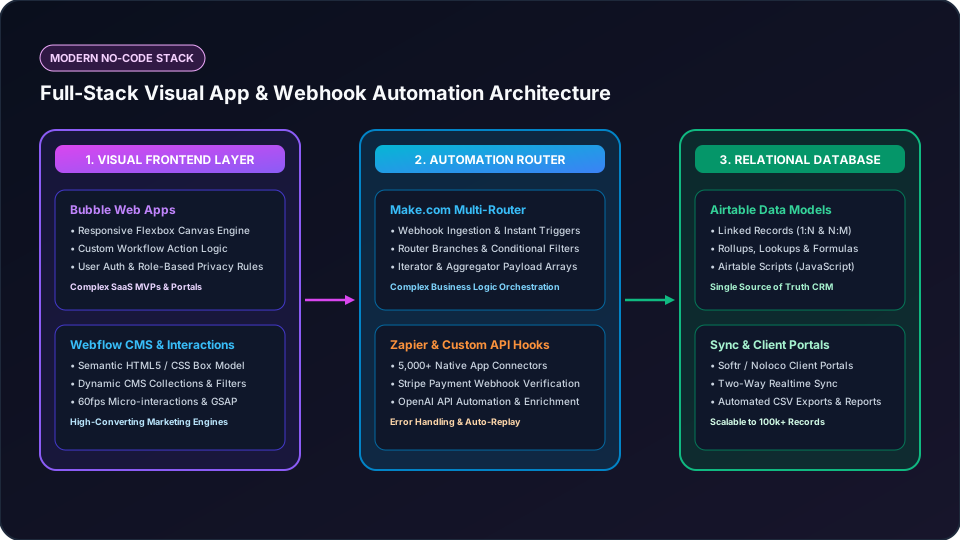
Full-Stack No-Code Architecture & Webhook Middleware Stack
Three-tier architecture showing visual frontends (Bubble/Webflow), middleware webhook automation routers (Make.com/Zapier), and relational databases (Airtable).
Visual Frontend Canvas
Bubble flexbox canvas and Webflow semantic HTML5 engines building responsive client-facing interfaces.
Automation & Webhooks
Make.com and Zapier multi-routers processing webhooks, formatting arrays, and triggering third-party APIs.
Relational Database Engine
Airtable linked records, rollups, and JavaScript automation scripts acting as the single source of operational truth.
Speed-to-Market
Shipping commercial SaaS prototypes and internal tools in 2 weeks instead of 6 months.
Structured Week-by-Week Learning Syllabus
Focus on build-by-doing milestones rather than passive video lectures.
Phase 1: High-Converting CMS Web Design (Webflow)
- Webflow box model, CSS Grid, responsive breakpoints, and classes
- Dynamic CMS collections, multi-reference fields, and filtered views
- Interactive micro-animations, navbar states, and custom form actions
Phase 2: Complex Full-Stack Web Applications (Bubble)
- Bubble responsive layout engine, custom states, and reusable elements
- User authentication, role-based privacy rules, and relational data structures
- Custom workflows, condition logic, and Stripe payment gateway integrations
Phase 3: Automated Architecture (Make.com, Zapier & Airtable)
- Airtable relational database modeling (1:N and N:M linked records, rollups)
- Make.com scenario routing, webhook ingestion, routers, and JSON aggregators
- Connecting OpenAI API for automated content generation and Slack notifications
Top Interview Questions & Answers
Q1: How do you structure privacy rules in Bubble to ensure sensitive user data is not leaked?
Bubble privacy rules are defined on data types on the server side. You specify conditions (e.g. "Current User is This Thing's Creator" or "Current User's Role is Admin") and restrict viewable fields, search visibility, and auto-binding. This prevents client-side inspection tools from intercepting unauthorized database fields.
Q2: What is the advantage of using Make.com (formerly Integromat) over Zapier for complex automation architectures?
Make.com provides visual multi-branch routing, array iterators and aggregators, advanced error-handling directives (Rollback, Resume, Ignore), granular execution history, and substantially lower per-operation cost for enterprise data volumes compared to Zapier.
Frequently Asked Questions
Can no-code applications scale to tens of thousands of users?
Yes! Bubble applications routinely handle millions of monthly pageviews and millions of database records when database indexes and search queries are properly architected.
How much can a freelance No-Code developer earn in India?
Indian freelancers targeting US and European clients typically earn between $2,000 and $6,000 (₹1.6L to ₹5L) per month by delivering complete MVPs and automation workflows.
Target Job Roles
No-Code Developer / Bubble Specialist
Demand: Very HighWebflow Designer & Developer
Demand: HighAutomation Architect (Make / Zapier)
Demand: HighRelated Career Tracks
Not sure if No-Code / Low-Code Development is right for you?
Take our 30-second career quiz to find your highest-ROI match.
Start Free Quiz